• Skip to main content

greg cooks

nourishing the body

  • Home
  • About Us
  • Contact Us
  • Block Examples
  • Landing Page
  • Pricing Page

ethnic

Mar 08 2009

Braised Carrot and Daikon with Chicken

Brimming with Asian fusion flavors, this braised vegetable and chicken dish certainly warms things up on a cold winter’s day. I was looking for a hearty stew-like dish to accompany some cooked barley and bulgar wheat. While foraging around in my fridge I found some boneless skinless chicken breast, carrots and a big fresh daikon radish. Sweet vegetables require a savory, sweet and flavorful sauce. I knew I wanted to do a braise and let the root vegetables get nice and tender sweet. The only question that remained was how to season the dish.

I opened up my cupboard of Asian goods and found some of this fish flavored dashi powder. This is like Korean bullion but made with fish, not beef or chicken. That provided a nice undercurrent of flavor.

I also spied my bag of dried Chinese goji berries. These would make a nice addition to the dish as they would provide a bit of fruity sweetness to go along with the carrots. And I love the color.

I started with the dashi powder and goji berries in a large pan.

I cut some carrots and daikon into large cubes.

These were added to the pan with some water, mirin and soy sauce. This was cooked, covered, for about 20 minutes until the liquid reduced down and the vegetables were beginning to brown and caramelize.

I added some water back ot the pan to make a sauce and threw in some cubed chicken. This was covered and cooked for about 10 minutes until the chicken was cooked through and all the flavors were married together.


Written by greg · Categorized: asian, chicken · Tagged: carrot, daikon

Mar 07 2009

Daikon Kimchee

Kimchee is a Korean staple and I really love the crunch of the vegetables and the sweet spice of the Korean red chili. Quite some time ago I posted a kimchee tutorial for making the classic fermented napa cabbage. There are many kinds of kimchee in Korea and daikon is another favorite vegetable for pickling in this way. I really enjoy the Korean daikon, which is more round and shorter than the typical daikon you find in most grocery stores. But you can use either for this dish. I actually used one large regular long daikon to make a batch. Two Korean bulbs would be about the same amount.

The process I used to make this is similar to the cabbage variant. I diced the radish, salted it and let it sit for about an hour. After a good rinsing the diakon was tossed with one bunch of green onions, sliced; 5 cloves of garlic, chopped, 1 inch of fresh ginger, minced; about half a cup of Korean red chili flakes, and about a tablespoon of nuöc mam fish sauce. I prefer the Three Crabs brand. You don’t want to know how this is made! But it isn’t kimchee without some fermented fish. Traditionally, kimchee is prepared with chopped fish or fermented shrimp. This sauce makes it much easier to add that hint of fish. I also added a pinch of sugar. Mix everything well and let it sit out for at least a day then store it in the fridge. Unlike the napa cabbage kimchee, which I like well fermented and sour, I prefer my diakon kimchee fresh and sweet.

Written by greg · Categorized: Korean · Tagged: daikon, kimchee

Feb 24 2009

Mediterranean Meditation – Greek Salad

In the middle of winter when the temperatures are hovering near 0 °F a little bit of Mediterranean can make a salad appetizing. Hence the inspiration for my Greek salad with tuna. Glistening with a lemon/olive oil dressing, this salad really hit the spot tonight.

On the bottom is a bed of chopped romaine lettuce. This was seasoned with the dressing and some dried oregano. I also mixed some carrots, cucumber and tuna together and dressed that. An onion was sliced into rings and the bite was taken down by soaking for a few minutes in ice water. This also does a great job of crisping up the onions. These were tossed in the dressing and placed on the lettuce. The carrot/tuna mixture was added on top of that. Finally I added feta cheese and kalamata olives. The whole dish was seasoned with some salt, pepper and more dried oregano.

It matched perfectly with a crisp, citrusy New Zealand sauvignon blanc.

Written by greg · Categorized: Greek · Tagged: Greek salad

Feb 22 2009

Rustic lemon chicken with peppers and butter beans

We used to have a local Italian restaurant many years ago that would serve a rustic country dish made with sausage and peppers. I remember the wonderful tangy lemony broth that the dish was cooked in and how it mingled with the Italian herbs and the sweetness of peppers. This isn’t quite the same but I was inspired by that dish when I made this for dinner the other evening.

My dish was composed of two boneless skinless chicken breast cut into slices; one each of red, yellow and orange sweet bell peppers, sliced; one onion, sliced; six cloves of garlic, chopped; one can of butter beans, drained; dried Italian mixed herbs; juice and zest of two lemons; salt, pepper and a bit of water.

I started by sautéing the seasoned chicken breast in a hot pan with a bit of olive oil.

The onions and peppers were added followed by the garlic and lemon zest a few minutes later. These were cooked until they just started to soften.

I then added the beans along with about a half cup of water. You could add chicken broth or even wine at this point. I put in about half of the lemon juice. The cover was placed on the pan and everything was simmered together for about 5-8 minutes.
After the vegetables were tender I uncovered the pan, added the rest of the lemon juice and cooked it down for a few more minutes to concentrate the liquid to a flavorful broth.

This rustic stew-like chicken was served with a big slice of 5 minute wheat bread to sop up the juices.


Written by greg · Categorized: chicken, Italian · Tagged: beans, peppers

Feb 16 2009

Shabu Shabu at home

It has been almost a year since I’ve made shabu shabu at home. Although I did report about a wonderful shabu shabu dinner I had in Japan in December. I actually made this meal a few weeks ago but am just getting around to blogging about it now. Please forgive me for being so late with my offering.

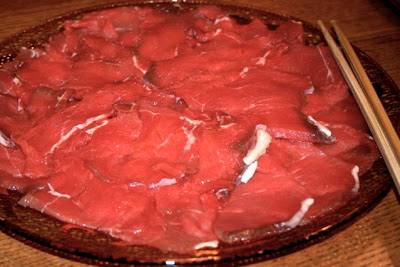
Shabu shabu is traditionally made with beef that is sliced paper thin. The name comes from the sound the beef makes as you swish it back and forth with your chopsticks in a pot of boiling broth. This is a wonderful family meal where everyone gets to share in cooking the meal at the table. My sirloin is not as marbled with fat as is usual for shabu shabu. I have some lean grass fed local beef that is still flavorful but also much healthier for you. Since the beef is only barely cooked, the texture still comes out tender even without the fat.
Shabu shabu also requires that you cook vegetables in the broth after you eat the beef. Here are bean sprouts, enoki mushrooms, shitake mushrooms, carrots, baby bok choy and napa cabbage ready to be cooked.
The table is all set with my nabe pot on the burner.

Before we sat down to eat the shabu shabu I fried up some frozen gyoza and served them with a spicy chili vinegar sauce.

The pot is heating up.
I have been soaking this kombu in the pot of water for a few hours to flavor the broth. This was removed once the pot came up to boiling.
I served two dipping sauces for my shabu shabu tonight. The first has soy, vinegar, green onions and grated daikon radish.
The second sauce is made from sesame paste, soy and vinegar.
We’ve eaten the meat and now it’s time for the veggies.

After you have had your fill of meat and vegetables, the broth that has been flavored even more intensely by all the food being cooked in it is used to prepare noodles. These udon noodles were made from scratch and cut just before cooking.
The udon is cooking nicely.
Yum! Comfort food all the way. Perfect on a cold winter’s evening.

Written by greg · Categorized: beef, Japanese · Tagged: shabu shabu, udon

  • « Go to Previous Page
  • Page 1
  • Interim pages omitted …
  • Page 3
  • Page 4
  • Page 5
  • Page 6
  • Page 7
  • Interim pages omitted …
  • Page 11
  • Go to Next Page »

Copyright © 2026 · Altitude Pro on Genesis Framework · WordPress · Log in